Smoke ventilation: natural vs. mechanical - how to choose correctly
A comparison between natural and mechanical smoke ventilation systems, their advantages, disadvantages, and applicability depending on the type of building.
Why smoke ventilation is vital
In fires, smoke - not flames - is responsible for the majority of casualties. Smoke ventilation systems evacuate smoke and hot gases, keeping evacuation routes passable and facilitating the intervention of firefighters.
Natural smoke ventilation
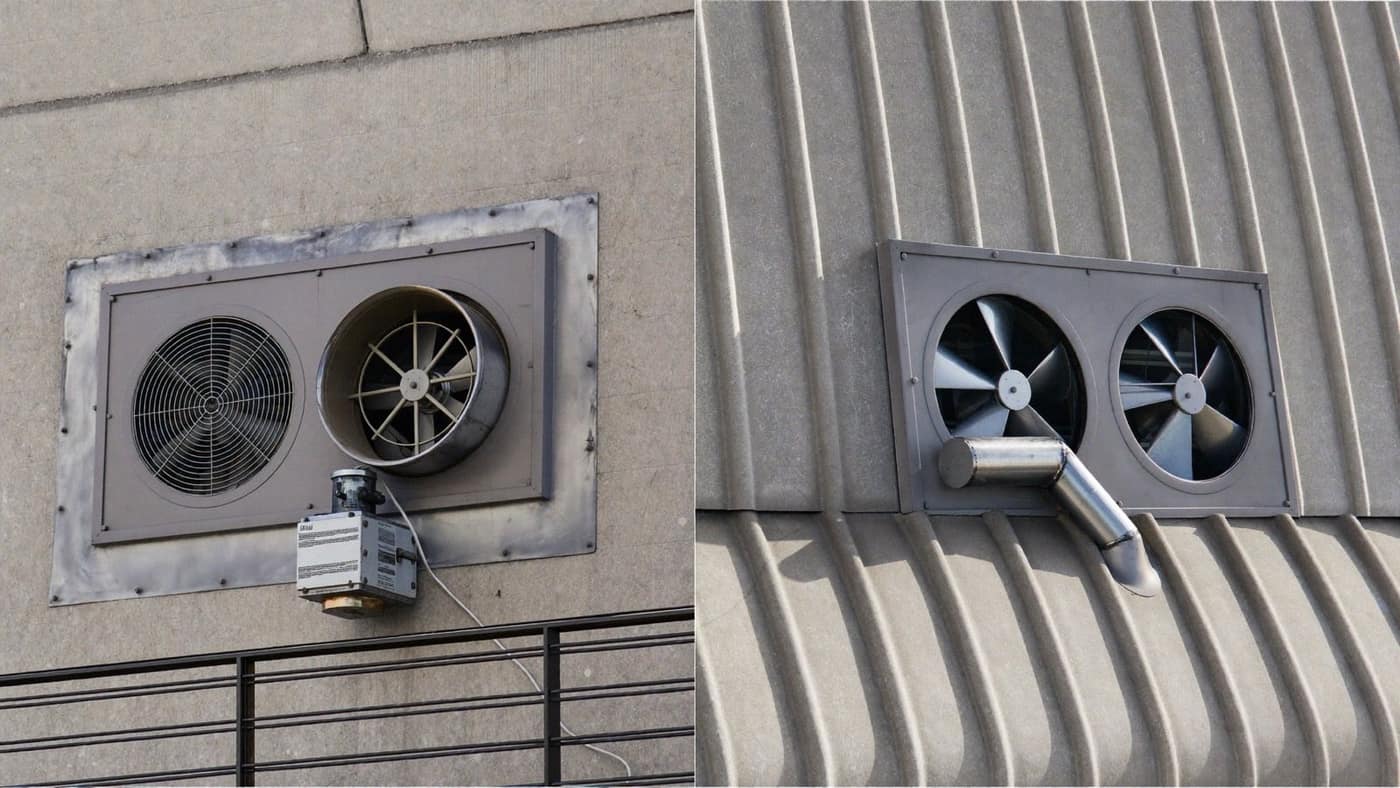
It uses natural draft: hot smoke rises and exits through smoke vents or ventilation windows placed in the roof or in the upper part of the façades, while fresh air enters through inlet openings located at a low level.
- Advantages: low installation and operating costs, no energy consumption, high reliability
- Disadvantages: dependent on atmospheric conditions, inefficient in buildings with many levels
- Applicability: industrial halls, warehouses, atriums, stairwells
Mechanical smoke ventilation
It uses special fans, resistant to temperatures of 400°C for 2 hours, which extract smoke through dedicated ducts, while air intake is provided naturally or mechanically.
- Advantages: controlled flow rate regardless of weather, works in basements and high-rise buildings
- Disadvantages: higher investment, requires a secure power supply and periodic maintenance
- Applicability: underground parking lots, malls, office buildings, tunnels
How to choose
The choice is made through the fire safety scenario, based on the building's geometry, intended use, and thermal load. In many projects, the optimal solution is hybrid: natural smoke ventilation in high areas and mechanical ventilation in basements and spaces with no roof access.
Need a solution for your building?
The Hydroworld team can help you with the design, installation and maintenance of fire protection systems.
Request Consultation